Our visit last weekend to Lisbon was a warm one, as temperatures soared to 90˚F (32˚C) in the capital city of Portugal…but no complaints here!
Lisbon is one of the oldest cities in the world, dating back some 3000 years. Many have occupied, or conquered, this coastal city since its beginning (from the Phoenicians, Greeks, Romans to the Moors) making its history a compelling one.
Built on seven hills that overlook the Tagus River (Rio Tejo), the city of Lisbon bears a resemblance to one of our favorite U.S. Cities, and not only because of its hills…more on this later.
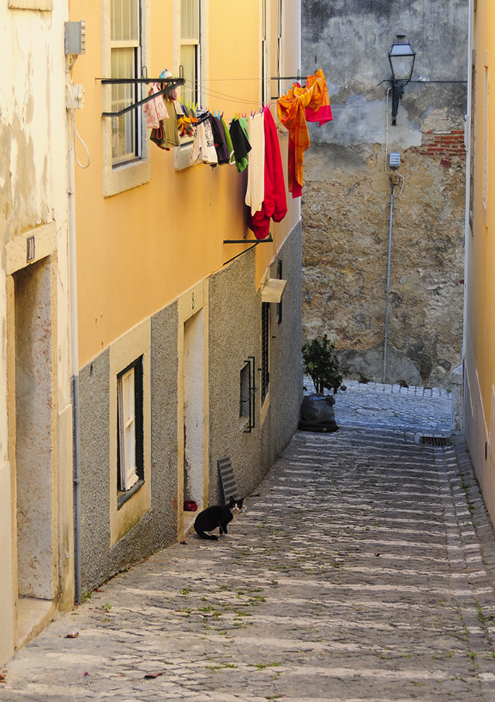
Streets of Lisbon
With its brightly colored houses, narrow, twisting streets with clothes hanging out to dry, panoramic viewpoints, and old vs. new extremes, it’s easy to spend time just wandering around Lisbon’s different neighborhoods. We did, and here are the highlights…

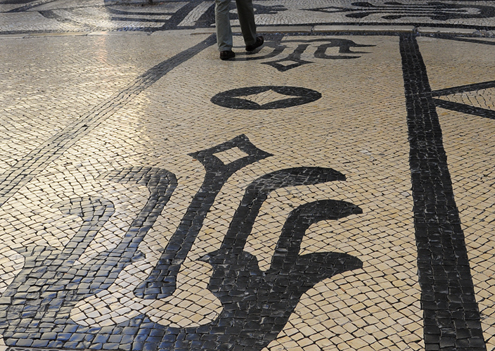
Tiled Pavement
We were quick to notice Lisbon’s artistically tiled sidewalks and pedestrian areas everywhere we went. This technique is a traditional style of pavement found throughout Portugal. Each tile, generally black or white, is manually placed to create a design. It must be an arduous job, but the results are striking.
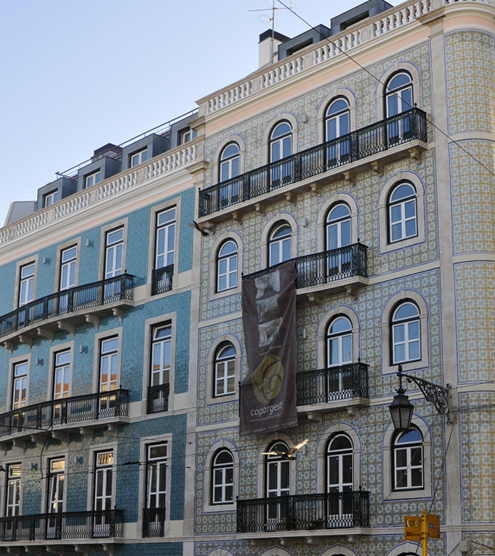
Ceramic Painted Tiles
Staying on the topic of tiles…
Beautiful ceramic, painted tiles (called azulejos) adorn the exteriors and interiors of several buildings throughout Lisbon. These ceramic tiles were introduced to Portugal in the 15th century and have made a unique impact on its architecture.
Castle of St. Jorge
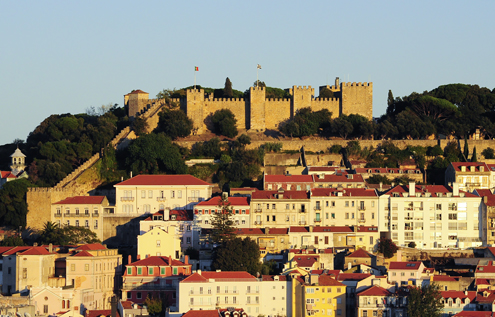
Castle of St. Jorge overlooks the city
The Castle of St. Jorge (Castelo de Sáo Jorge), in the Alfama district, overlooks the city of Lisbon and the Tagus River—offering spectacular views of both. Built in the mid-11th century by the Moors (although first settlements at this site are thought to be much earlier), this massive structure has served as a defensive stronghold, a royal residence, military barracks, and now as a national monument and tourist attraction.
The 25th of April Bridge

The 25th of April Bridge or Golden Gate or Bay Bridge...
The 25th of April (Ponte 25 de Abril) suspension bridge, connecting Lisbon to Almada, looks a lot like the bridges in a certain Northern California city where we used to live. Its construction resembles the San Francisco Bay Bridge, but the color is Golden Gate all the way. It was built by the same company that made the Bay Bridge…so maybe that has something to do with it.
Jerónimos Monastery

Jerónimos Monastery
The Jerónimos Monastery (Mosteiro dos Jerónimos or Hieronymites Monastery), in the Belém quarter, is a distinct example of Portugal’s Manueline style of architecture. Manueline architecture, named after King Manuel I, is unique to Portugal—also known as Portuguese Late Gothic. It is noted for its elaborate carvings and maritime elements.

Tomb of Vasco Da Gama and a guy with a checkered shirt
Jerónimos Monastery, with its close proximity to the Tagus River, was the place where arriving and departing seafarers once came to pray. The tomb of Vasco Da Gama, one of Portugal’s most successful seafaring explorers, is found here. (By the way, Vasco was Kevin’s favorite explorer.)
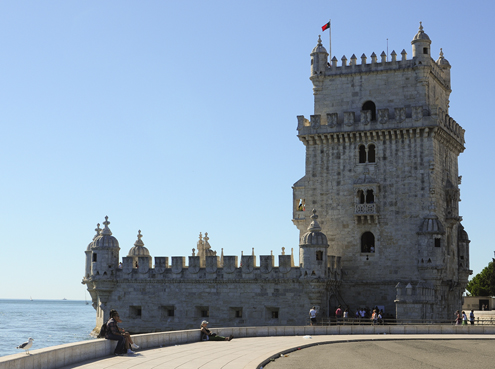
Belém Tower

Belém Tower
Belém Tower, built in the early 16th century in the Manueline style, (Torre de Belém) was once used as a military stronghold to protect the entrance of the Tagus River. It became a symbol of Portugal’s Age of Discovery and is now a major tourist attraction.

Portuguese Custard Tarts (Pastéis de Nata)
The popular Pastéis de Belém café, near the Jerónimos Monastery, has served up Portugal’s famous custard tarts (pastéis de nata) since 1837. These warm, bite-size gems, sprinkled with powered sugar, are hard to resist. Most pastry shops sell them, but Pastéis de Belém is known for being the best. Mmmm…Delicioso!
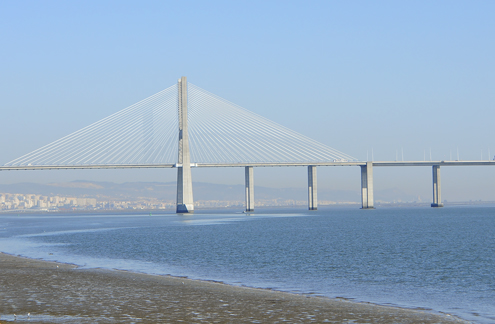
Vasco Da Gama Bridge

Vasco Da Gama Bridge
Vasco Da Gama Bridge is another beautiful bridge in Lisbon. It spans the Tagus River and, at 10.7 miles long (17.2 km), is the longest bridge in Europe.
Lisbon Oceanarium
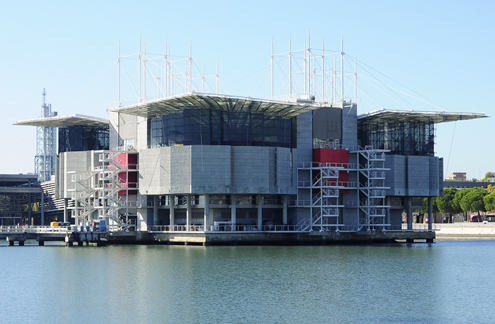
Lisbon Oceanarium
Lisbon Oceanarium (Oceanário de Lisboa), located in the Park of the Nations, offers a fascinating look at different marine species from around the world. The 11,000 square foot tank, in the center of the aquarium, is the main exhibit. This massive tank creates the illusion of an endless ocean with an array of sea life that’s impressive.

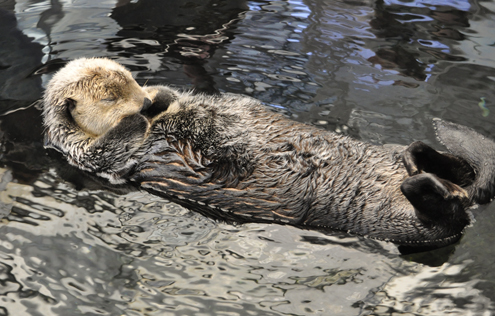
Sea Otter
I have to say the sea otter is my favorite. They are just so darn cute!

Time for an afternoon nap...
…and time to end this post. It was a great trip!
Notable Eats:
Lisbon offers up some delicious food. If you like fish, you can’t go wrong—seafood is a favorite here. Also, Portugal is the home of port wine…enough said.
Pastéis de Belém – Portuguese Custard Tarts (Rua de Belem 84 84)
Sul (Rua do Norte 13, Bairro Alto disctrict)
Sacramento (Calcada do Sacramento 46, Baixa-Chiado district)

















 k&mk
k&mk 