Scotland’s Highlands

Recently, we ventured to Scotland for a bit of outdoor fun in the Highlands and a quick city stop in Glasgow.  It was a jam-packed weekend filled with history, art, a hike, a couple of castles, loads of sheep and a famous monster.

Here are the highlights from the Highlands…

Culloden Battlefield

Culloden Battlefield: Red Flag indicates British Forces, Blue indicates Jacobites

Culloden Battlefield Grave Marker

Culloden Battlefield Grave Marker

About 5 miles east of Inverness, stands the village of Culloden where the brutal Battle of Colloden took place in 1746.  It was a bloody battle that lasted just under one hour between the Jacobite forces of Bonnie Prince Charles and the government troops of William Augustus.  The Jacobite army was determined to restore the House of Stuart to the British throne, but the British army was just as committed to maintain its current Hanover monarch.   The Jacobites were outnumbered and suffered severe loses.  This loss marked the beginning of the end of the Scottish clan system.
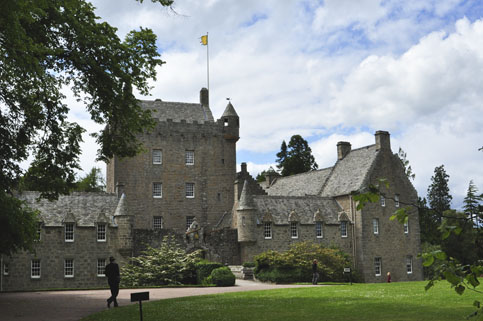
Cawdor Castle

Cawdor Castle

In Nairn, we paid a visit to Cawdor Castle.  The main tower of this castle was built in the 15th century while most of its additions took place in the 17th.  It is still an inhabited castle, although I’m uncertain how often the Countess of Cawdor is actually present.  The decor is not as “castle-esque” as one might think.   However, the grounds, gardens and the castle itself are aesthetically pleasing.

Loch Ness

Loch Ness

We stopped by the legendary Scottish Loch (lake) hoping to catch a glimpse of its famous monster.  No, good ‘ol Nessie didn’t show herself to us, but she still draws large crowds.

Urquhart Castle

Urquhart Castle

Once a medieval stronghold, Urquhart Castle stands in ruins on the banks of Loch Ness.  Its conflict-heavy history dates back to the 13th through 17th centuries when it passed back and forth between English and Scottish hands.  It was raided and seized several times until it was finally blown up in 1692.  It is one of Scotland’s most visited castles.

Nairn Coastline

Nairn Coastline

Since the Highlands sit far north of the equator, the summer months boast long hours of daylight.  The photo above was taken at 10:10pm.  Lovin’ it!

Here are a few of our fluffy, new friends we met along the way…

Still More Sheep

More Sheep

Sheep

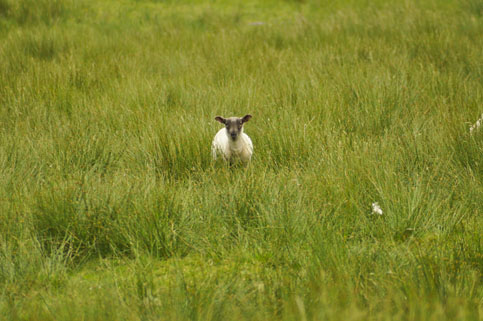
We seem to think the Highlands might have more sheep than people.  So cute!
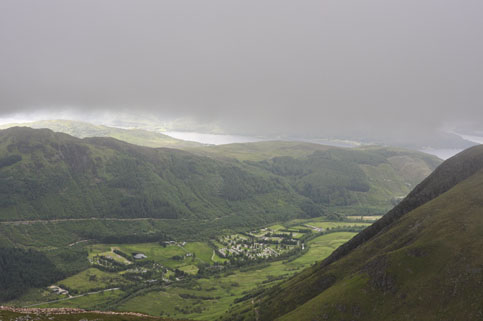
View from Ben Nevis Trail

View from Ben Nevis Trail

Kevin and I took some time out from sight-seeing to hike to the top of Ben Nevis—the UK’s largest mountain.  At 4,409 feet, Ben’s summit provided us a real treat of thick fog, strong winds and heavy mist (borderline sleet).  Needless to say, we were not prepared. The rain-gear failed to find a spot in our suitcase, but we persevered and finished…and it was awesome! (even though Kevin and I looked like we went through a car wash)

Another View from Ben Nevis Trail

From Ben Nevis Trail...with thick fog overhead

The hike itself is a real beauty—green mountains, steep cliffs and incredible views.  It was a moment we will never forget.

Being surrounded by the glorious scenery of Scotland’s Highlands was a true pleasure.  It was a great visit.

And now…

...off to Glasgow

...off to Glasgow.
Jamie Cullum @ Kew the Music

Jamie Cullum

Jamie Cullum at Kew the Music

Last Friday, we saw the very talented Jamie Cullum perform at Kew the Music—an outdoor music festival at Kew Gardens.  He was fantastic!

Jamie Cullum is an English-born jazz-pop singer-songwriter.  We started listening to his music around 2002 and saw him twice in concert whilst in San Francisco—once at The Palace of Fine Arts in 2006 and once at The Fillmore in 2010.  It was amazing to see him in London—his home turf.

Kew Gardens was probably one of the best outdoor concert venues we’ve been to.  It was so pleasant to listen to great music in such a beautiful setting. (It helped that the rain held off too!)

Fireworks after the concert

The concert ended with fireworks…how fitting.

Barcelona, Spain – Part II: Antoni Gaudí

As I mentioned in the Barcelona post, this post will feature the works of Antoni Gaudí i Cornet—the famous Spanish Catalan architect best known for his Modernist style.

Antoni Gaudí’s (1852-1926) architectural wonders lure many visitors to the city of Barcelona.  A large number of his most famous works are scattered throughout.  His signature style, almost devoid of straight lines, is so unique it’s mesmerizing.  He gained much of his inspiration from nature, which is clearly visible in his work.

Here’s a taste of some of Gaudí’s best…

Casa Batlló (commonly known as “House of the Dragon”)
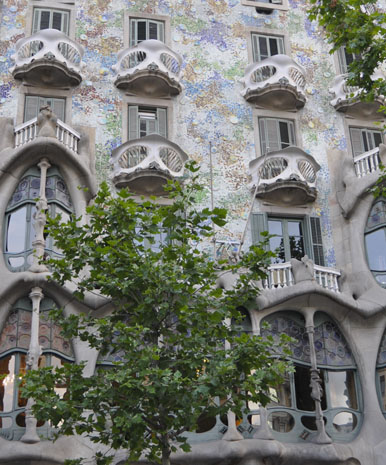
This building, originally designed for a middle-class family, is one of Gaudí’s more colorful works. It was built in 1877 and remodeled from 1904 to 1906.  Its blue, green and purple tiled facade and sculpted, curved balconies that look like masks, make this structure stand out from those around it.  The arched roof resembles the scales of a dragon, as Gaudí based this work on the legend of Saint George and the dragon.

Casa Batlló

Casa Batlló

La Pedrera (meaning “the quarry”)
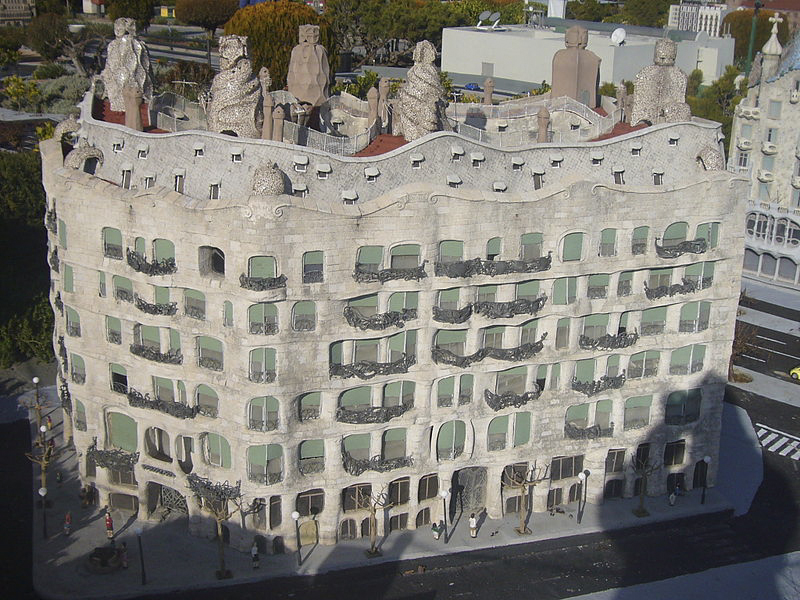
La Pedrera was built between 1905 to 1910 as an apartment and office building.  Commissioned by the Milà family, it was formally known as Casa Milà.  Its grey, stone facade virtually ripples down the street and its rooftop is a fanciful forest of giant chimneys.  The attic houses a small museum where models of Gaudí’s work help explain the methodology of his genius.

La Pedrera

La Pedrera

[La Pedrera photo above by Jordiferrer.  Available under Creative Commons Attribution-Share Alike 3.0 Unported license and GNU Free Documentation License.]
(Kevin and I somehow forgot to take a photo of the exterior.  Shocking, I know.)

La Pedrera Chimneys

La Pedrera Chimneys

La Pedrera Roof

La Pedrera Rooftop

Park Güell
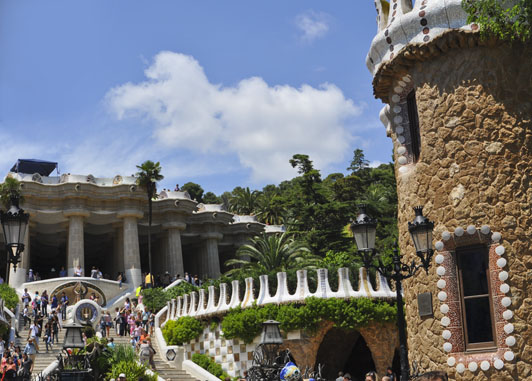
When Park Güell originated in 1900 it was to become a residential housing development, but the project eventually flopped.  Over the years, the site converted into a public park or, as some might say, a grand museum of Gaudí’s colorful and imaginative ways.

Park Güell

Park Güell

Park Güell Entrance

Park Güell Entrance

The tale of Hansel and Gretel seems to be the inspiration behind this design.   The gate house to the right of the entrance is made of gingerbread, I think.

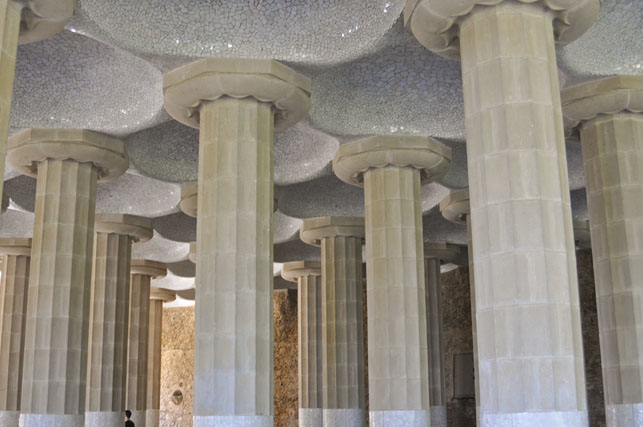
Hall of a Hundred Columns

Hall of a Hundred Columns - Park Güell

The “Hall of a Hundred Columns” was originally designed as a market space for the “never-to-be” residential development.

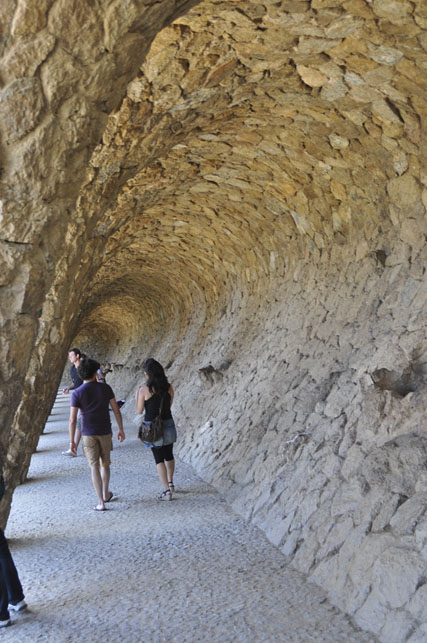
The Tube - Park Güell

The Tube - Park Güell

Long tube arcade.  Just fascinating.

And finally, Gaudí’s most famous work, his unfinished masterpiece…

La Sagrada Família (The Holy Family Church)
Gaudí became the main architect in 1883, one year after construction began, and worked on the church until his death in 1926.  He spent the latter part of his professional career carrying out this ambitious plan.  When the church is complete, in some 25-30 years, (yes, I typed that correctly) it will be a grand achievement.  La Sagrada Família is solely funded by private donations, so you are assisting the ongoing construction by paying the entrance fee (which is probably why it is taking so long).

La Sagrada Família

La Sagrada Família

When finished, the church will have the capacity for 13,000 people.  It will include 18 towers dedicated to the 12 apostles, the 4 evangelists, the Virgin Mary and Jesus Christ (8 are now built) and will also have three facades: the Nativity Facade, the Passion Facade and the Glory Facade (Resurrection).  Of the three, the Glory Facade is the only one that has yet to be finished.  On the 7th of November 2010, Pope Benedict XVI consecrated La Sagrada Família, so it is now a holy place of worship.

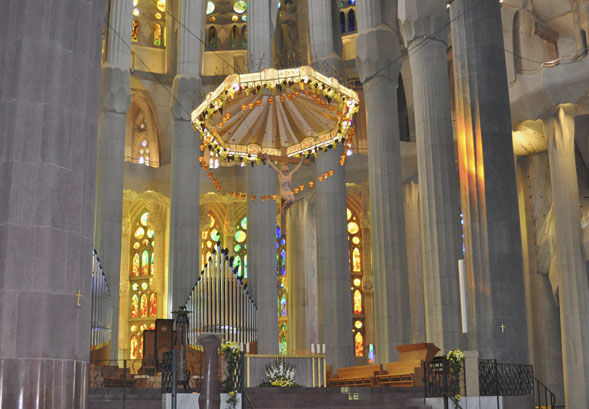
La Sagrada Família Altar

La Sagrada Família Altar

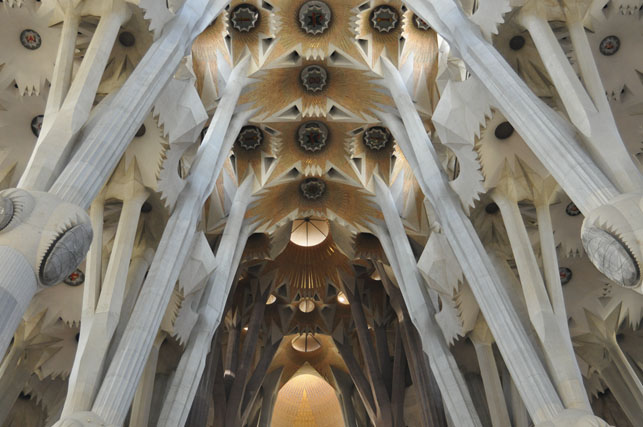
La Sagrada Família Ceiling

La Sagrada Família - Ceiling

Here is a prime example of Gaudí’s use of nature, as these columns look like trees.

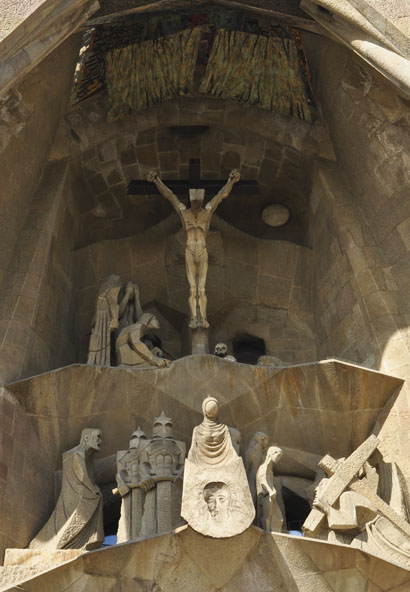
La Sagrada Família Passion Facade

La Sagrada Família - Passion Facade

Passion Facade Sculpture

Passion Facade Sculpture

Gaudí used real people and animals as models for the majority of his sculptures.

Whether you like Gaudí’s style of architecture or not,  his work is something to see.  There is no doubt that Gaudí was a genius in his field.  Even after all these years, his designs still inspire awe.  It was a great Gaudí day.

Barcelona, Spain

View of Barcelona from Montjuïc Castle

View of Barcelona from Montjuïc Castle

Our next stop in Spain was Barcelona, the capital of the Catalonia region and its second largest city, after Madrid.  Barcelona is a captivating place—its European charm, urban style, diverse art & architecture and Mediterranean climate, make it a unique city to visit.

We began our Barcelona tour strolling down La Ramblas—one of Spain’s most famous streets.  La Ramblas is a wide, pedestrian boulevard lined with restaurants, shops and people.  It is a main tourist attraction and people-watching spot and one of those things you have to see, even if you only walk down La Ramblas once.

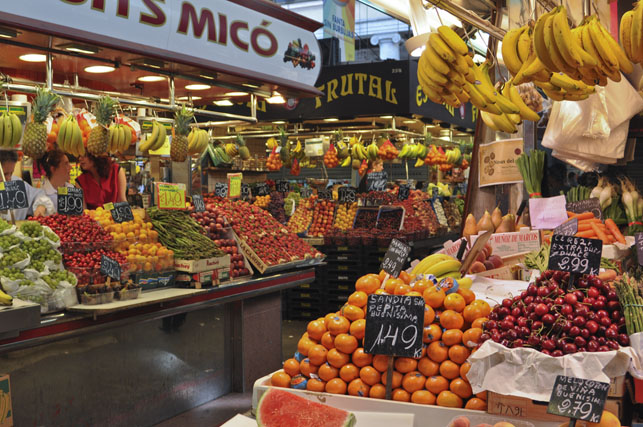
Boqueria Market

Boqueria Market

The massive Boquería Market, also known as St. Josep Market, is located midway down La Ramblas.  Opened in 1840, this lively marketplace is one of the city’s oldest and sells just about everything.  It is a top market for some of the city’s best chefs. We can see why…

Boqueria Market

Take your pick...

Chocolate at Boqueria Market

Chocolate Anyone?

Way too many choices!

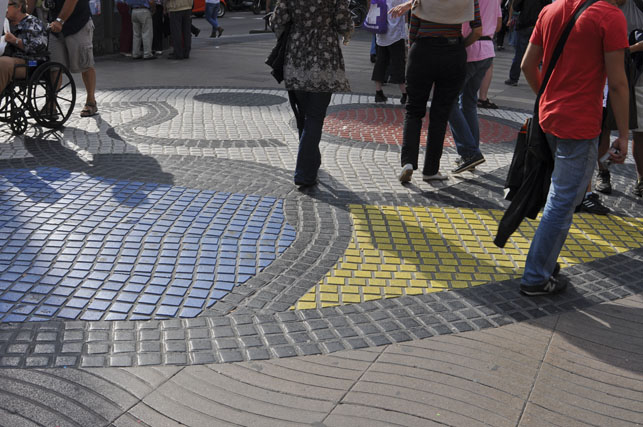
Miró Mosaïc

Miró Mosaïc

Close by the Boquería Market, is a very special piece of pavement.  If you are not paying attention or if too many people are walking about, you can miss the Miró Mosaïc (Mosaïc de Miró).  Joan Miró, one of the greatest Catalan artists, made the city of Barcelona this colorful, bold mural.  Very cool.

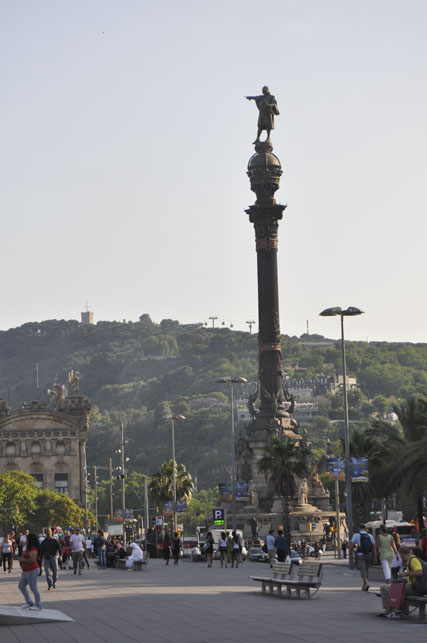
Christopher Columbus Monument

Christopher Columbus Monument

The 200 foot tall Christopher Columbus Monument stands at the end of La Ramblas on the seafront.  Its location marks the site where Columbus returned to Spain after his first journey to America.  Thanks, Chris!

Barri Gòtic

Barri Gòtic Alley

Kevin and I also spent some time wandering around the Barri Gòtic, or Gothic Quarter.  Its web of narrow, winding streets and fascinating, medieval architecture is teeming with cafes, restaurants, shops and musicians.  This area completely engaged our senses.

Barcelona Cathedral

Barcelona Cathedral

Within the Barri Gòtic, on Plaça de la Seu, is the Barcelona Cathedral.  Most of the construction on this massive, Gothic style cathedral took place in the 14th century.  Its spacious, open interior and ornately carved chapels is worth a visit.  The façade is currently undergoing a major restoration.

Also in the Barri Gòtic is Barcelona’s most popular museum—the Museu Picasso (Picasso Museum).  This museum is housed within several medieval mansions on the narrow street of Carrer de Montcada.  The collection mainly includes works from Picasso’s formative years (which he spent in Barcelona) as well as specific pieces from his later years.  It is a fascinating look into this world-famous Spanish artist’s genius.  We are huge fans!

Stepping away from the Barri Gòtic, we spent one day on Montjuïc (“Mount of the Jews”).  This broad hill, overlooking the city and its port, is home to museums, gardens, a castle and the main sites of the 1992 Olympics.

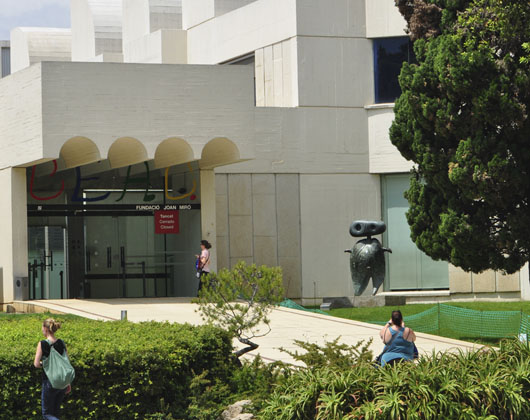
Fundació Joan Miró

Joan Miró Museum

On Montjuïc, we visited the Joan Miró Museum (Fundació Joan Miró).  The museum features the greatest collection of paintings, sculptures, textiles and drawings from this renowned Catalan artist.  It’s an amazing look into the abstract world of Miro’s creative brilliance.  If you like his work, it is a must-see!

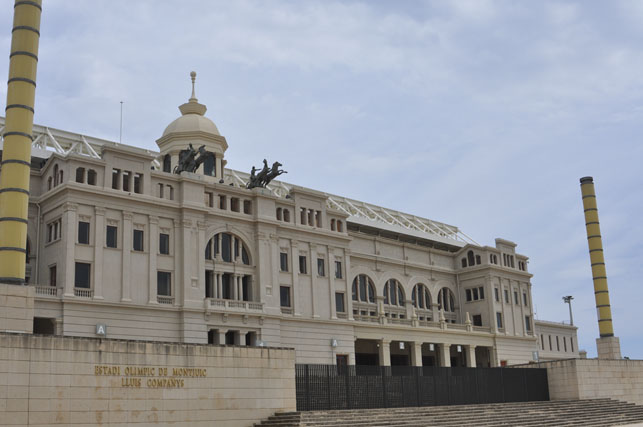
Olympic Stadium

Olympic Stadium

Montjuïc was the main site of the 1992 Olympic Games.  The Olympic Stadium (Estadi Olímpic) was redesigned from an earlier version that opened in 1929.  For all USA Basketball fans, this was the year of the “Dream Team”—Bird, Barkley, Johnson, Jordan and Ewing.  Wow.

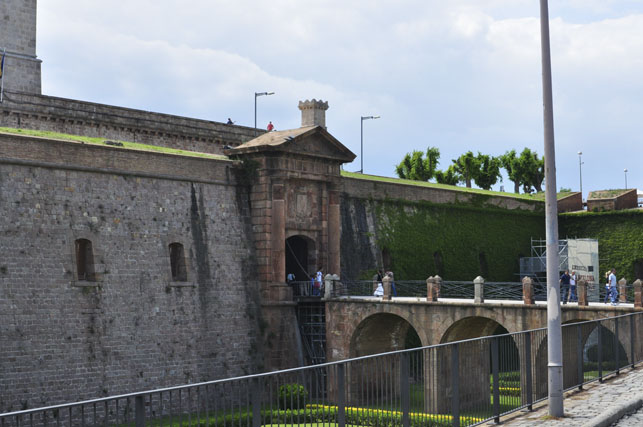
Montjuïc Castle

Montjuïc Castle

In the 18th century, the Spanish government built Montjuïc Castle to watch over the city.   Over the years, it also served as a political prison and execution site. Today, the castle is home to a military museum and the grounds offer spectacular panoramic views of Barcelona and its port (photo at top of post).

Another museum we visited on Montjuïc was the National Art Museum of Catalonia (Museo Nacional d’Art de Catalunya).  This museum features Catalan art through the centuries, as well as its acclaimed collection of Romanesque mural paintings.

Barceloneta Beach

A Beach in Barceloneta

Down from the hill of Montjuïc, we toured Port Vell and La Barceloneta.  This area on the coastline was dramatically redeveloped for the 1992 Olympic Games bringing parks, residential buildings and a conference center to an otherwise forgotten part of the city.  Its home to great seafood (we hear the best paella), sandy beaches and a long promenade—a perfect place to escape from the bustling city and a great place to end this memorable trip.

Whew! We saw a lot in Barcelona, but it’s not over yet…
Part II will cover Antoni Gaudi, as his work deserves its own space.